
Archives
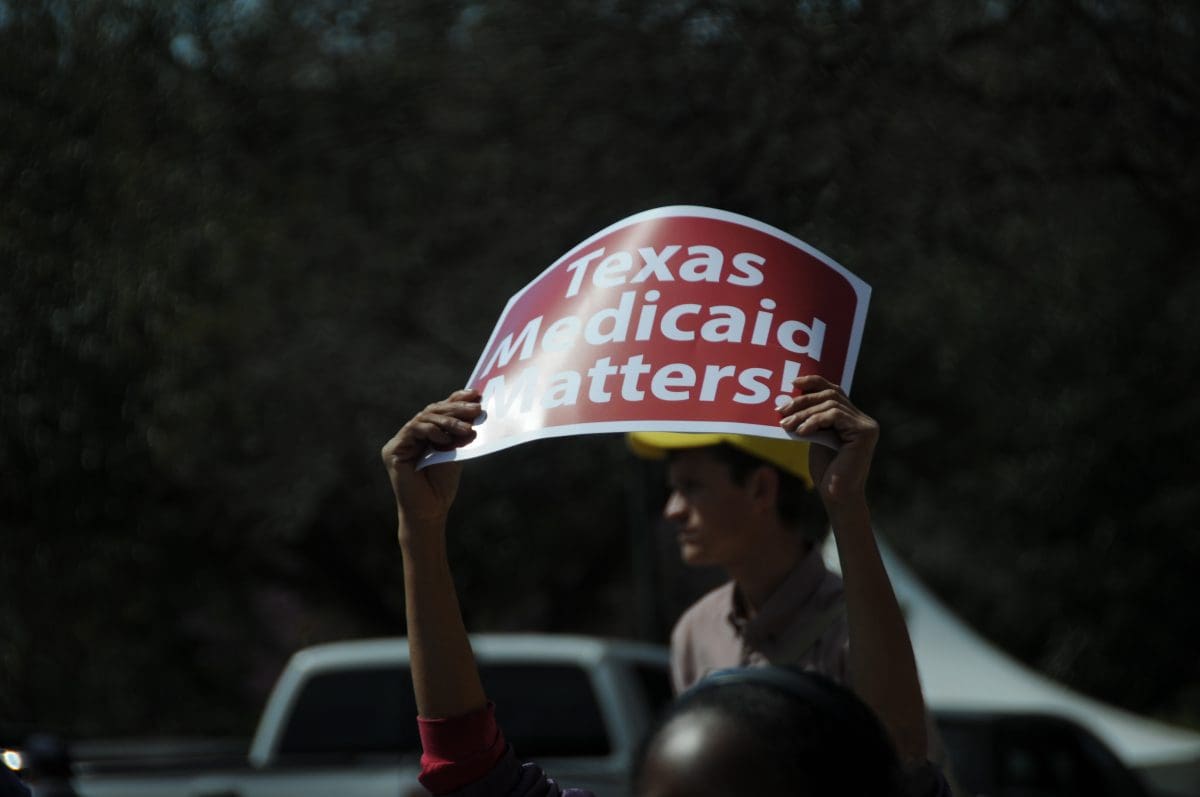
The House Committee on Appropriations approved its budget proposal on March 29, and a floor vote by the full House is set for April 6. The bill will, as usual, undergo some additional amendments on the House floor. Let’s explore some key Medicaid and Children’s Health Insurance Program (CHIP) provisions in the House Committee bill. After the House finalizes its budget proposal CPPP will post a comparison of the House and Senate budget proposals on Medicaid-CHIP policy and funding..
Key takeaway: some aspects of the House Committee‘s $63.2 billion All Funds proposal for Medicaid are positive, but other provisions raise serious worries about the security of medical and long-term care for millions of Texans.
As we have noted elsewhere, in this 2017 session it is especially critical to consider the supplemental appropriations bills for the current 2016-2017 budget period as part and parcel of the 2018-2019 budget plans. Without considering supplemental appropriations, any analysis of funding for state services and use of revenues will have major gaps.
As Eva DeLuna Castro noted in her post before the House Committee vote on its 2018-2019 bill, HB 2, the House’s supplemental bill for 2017, would use $931 million in General Revenue (GR) for Medicaid, which would also bring Texas $1.7 billion in federal matching funds. Combined, this $2.6 billion would ensure that Texas can pay the health care costs of about 4.1 million low-income Texans through the end of August 2017. This gap in funding is largely the result of 2015 budget writers’ choice to leave projected Medicaid cost inflation out of the 2016-17 appropriations act. HB 2 would also provide funding or transfer authority in fiscal year 2017 to undo half of the 2015 Legislature’s cuts to Medicaid acute care therapy services ($51.3 million in state and federal funds).
So under the House Committee’s budget plan, Medicaid makes it out of the current 2016-2017 budget period in fairly good shape. For 2018-2019, the House Committee’s bill funds enrollment growth in Medicaid, but does not fund the Health and Human Services Commission (HHSC) “Exceptional Item” request for cost growth in Medicaid (scored at over $1.75 billion GR early in session).
But the 2018-2019 House proposal also includes some large-scale provisions that create significant questions and concerns. In order of size, they are:
- HHSC Rider 36: Medicaid Funding Reduction and Cost Containment. Since 2011, each state budget bill has included a Medicaid Cost Containment rider directing reductions in spending and listing a number of policy options for cutting that spending. The House bill calls for cutting total 2018-2019 Medicaid spending by $111 million of GR ($244 million of All Funds), and lists 15 options for pursuing savings, plus authority for the agency to identify other approaches. The Senate’s bill has a version of this rider that cuts several times as much; stay tuned for that update.
- Article IX Rider 17.10: Contract Cost Containment. This lengthy rider in Article IX of the bill calls for $496.3 million in spending reductions attributed to sweeping changes in contracting practices across all agencies, but over 90 percent of the reduction ($450.2 million) is directed to HHSC. Contracting practices and irregularities have come under intense scrutiny in recent years, with recommended changes coming from the Legislative Budget Board staff report, a state auditor’s report on HealthSpring (a Medicaid Managed Care StarPlus contractor), an HHSC report to the legislature, and a House Appropriations subcommittee on budget transparency.
- HHSC Rider 186: Federal Flexibility. This rider directs HHSC to “pursue flexibility” from the federal government to reduce Texas Medicaid 2018-2019 spending by $1 billion GR ($2.4 billion All Funds). As worded in the House Appropriations Committee bill, the rider raises concerns that it could direct or allow very large program cuts. It simply directs HHSC to identify cost savings and report changes to Medicaid and CHIP to the LBB. Before taking a vote, committee Chairman Zerwas sought to reassure members that services would not be compromised. Amendments to better clarify the intent are expected to be offered on the House floor.
The three potential reductions to Medicaid spending listed above from the House Committee bill total $1.56 billion GR. Add to that the lack of funding for projected Medicaid cost growth which may approach $2 billion GR (and which the Senate has also neglected to fund in its budget), and we could be approaching—or exceeding—the scope of cuts adopted in 2003 and 2011.
Except for one thing. Only the HHSC Cost Containment rider 36 actually directs program cuts. As discussed in a recent blog on the Senate’s original filed budget, Texas has in a number of sessions over the last 20 years short-funded Medicaid to allow for a smaller balanced budget to be passed, but guaranteeing a substantial supplemental appropriation will be required in the next session to fund the final months of Medicaid (costs are currently running around $1.5 billion GR a month).
When budget writers do not direct the Medicaid agency to make a program, eligibility, or benefit cut to reduce spending to meet the state funding written into the budget, then the under-funding does not have to result in reduced eligibility or services for Texans on Medicaid. The Legislature can fill the gap in the next session. But they can only fill that gap if the state has the revenues available. Without revenues to fill these gaps, cuts could be forced, and fewer Texans in need of Medicaid will be covered, and/or the children, seniors, Texans with disabilities and pregnant women served today will get fewer health care services.
We hope that the final bill adopted by the full House will quell some of these fears. But as we wait for those actions, we remain deeply concerned about the large size of the Medicaid under-funding, and worried that the gaps may become cuts that are even deeper than the failed cuts of 2003.
Categories
Repeal Bill Threatens Texas Medicaid
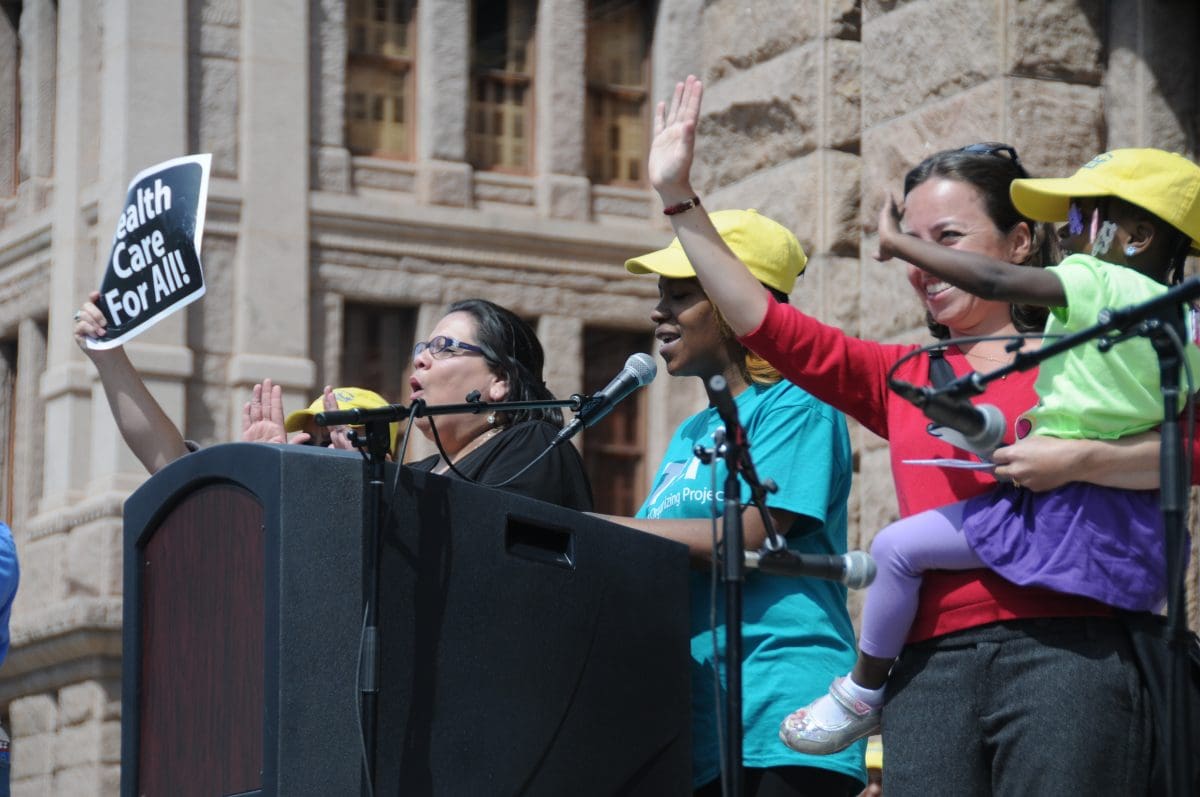
Last week’s Congressional Budget Office (CBO) official “score” for the House’s ACA Repeal bill found that it would cut Medicaid spending by 880 billion over 10 years, with 14 million fewer Americans receiving Medicaid coverage in 2026 than under current federal law. The bill also slashes today’s tax credit subsidies for health insurance by 44%, with seniors, older adults, and rural Americans taking the brunt of the impact. CBO projects that the combined impact of the Medicaid and private insurance cuts would be 14 million fewer Americans insured in 2018, increasing to 24 million fewer in 2026: a complete reversal of the coverage gains the country has seen under the ACA.
Here is CPPP’s newest list explaining the major Medicaid changes the U.S. House will likely vote on this week, noting the specific problems and impacts for Texas (note: this brief covers the latest changes to the bill announced late Monday 3/20, which made the Medicaid provisions harsher, not better for Texas). To recap the top Medicaid concerns with the repeal bill:
- Under the proposed Per Capita Cap, if Texas makes errors in predicting and budgeting for Medicaid spending in an upcoming year and our federal funds are inadequate, our Legislature’s history indicates they will cut benefits, payment, or enrollment in response—not fill the gap with state funds—to pay for the federal recoupment of funds.
- Rigid use of a 2016 Medicaid spending for a “base year” will lock Texas and other states into permanent inadequate provider networks.
- If the make-up of Texas Medicaid enrollees in one of the four Per Capita Cap enrollment groups changes over time to have more intensive needs—e.g., for our elders or Texans with disabilities—we will be unable to meet their needs, and it will take an act of Congress to fix a too-low funding cap.
- Limits to 2016 benefits also make our Medicaid funding allocation too low to allow us to adopt best treatment practices and standards of care without first cutting elsewhere.
Read the brief to learn more about these four points, and more, including:
- Roll-back of Medicaid Expansion;
- Allows Texas to roll back Medicaid eligibility for kids;
- Medicaid expansion possible still, but no enhanced match in future years. Still, Texas will lose billions each year if we do not move ahead, locking in a system with no coverage option for working poor adults.
- Cuts federal funds for Attendant Care under Community First Choice;
- Eliminates Medicaid “3-months prior” coverage, which is a safety net back-up for state Medicaid eligibility system failures, and also hits hospitals and enrollees; and
- Locks Texas into inadequate provider payment rates, creating a fund to address rates that is far too small to meet Texas’ needs.
Click here to learn more about what’s at stake for Texas Medicaid.
TAKE ACTION – ACA repeal and Medicaid Block Grants
Speaker of the House Paul Ryan is aiming to hold the vote on the federal health care repeal bill on Thursday March 23 if he can count up enough votes to support it. It’s going to come down to a handful of votes. So now is the time to call Congress at 866-426-2631, alert your friends, get on social media, visit the local office for your member of Congress, or raise your voice in your own way. Visit here for more information on the detrimental ACA repeal and the House health care proposal.
Categories
STUCK IN THE MIDDLE GRADES

By Anne Dunkelberg
This week I joined CPPP Senior Policy Analyst Stacey Pogue for a Facebook Live discussion about what Congressional health care proposals might mean for Texas.
You can watch a recording of the discussion here.
Overall: The most distressing part of the Congressional plan is that it doesn’t provide a pathway to reach the remaining 4.6 million uninsured Texans, and instead would likely increase that number and erase the coverage gains of the last several years.

Some of the other key takeaways from our early analysis of the health care proposal coming out of Congress include the following:
Marketplace and Individual Market Insurance
• This proposal makes private coverage unaffordable for millions of Americans. Premiums will rise for many people getting affordable coverage today in the Health Insurance Marketplace, and out-of-pocket costs like deductibles will go up, too.
• The plan would replace the ACA’s sliding scale tax credits (which adjust for income, age, and cost of insurance where you live) with a less generous, essentially flat tax credit (that adjusts only for age). This means there would be clear winners and losers. People hit the hardest are lower income, older (ages 50-64), and people who live in rural areas, where the underlying cost of health insurance is higher. Note that about 900,000 Texans get a tax credit under the ACA.
• There are some provisions in the plan that just don’t make sense. A family of four who makes $100,000 per year, under this new plan, would get the same subsidy / tax credit as a family that makes $30,000 per year.
• Premiums would also rise under this bill because there is much less incentive for younger and healthier people to get coverage. Today, there is a penalty that encourages people to get insurance. Eliminating this provision changes who is covered. More sick people keeping coverage, and more healthy people dropping it would mean raising premiums for everyone.
Medicaid
• In Medicaid, starting in 2020, the plan would cap the overall federal funding available to Texas, preventing necessary increases to allow Texas to add life-saving innovations, bring up seriously inadequate payments to care providers, or fill current gaps in basic health care services.
• In other words, the plan would make it really hard to improve anything that we are not doing well today. For example, Texas hasn’t given doctors regular pay increases under Medicaid since 1993, and there would be no space under a “cap” to improve that.
• There are also over 200,000 Texans on waiting lists for Community Care programs, and they wouldn’t have a way to get off those lists if Congress caps Medicaid funding.
Stay tuned for more updates from CPPP as the health care debates in Washington and Austin continue.