
Categories
Archives
Categories
State of Texas Kids- Rio Grande Valley
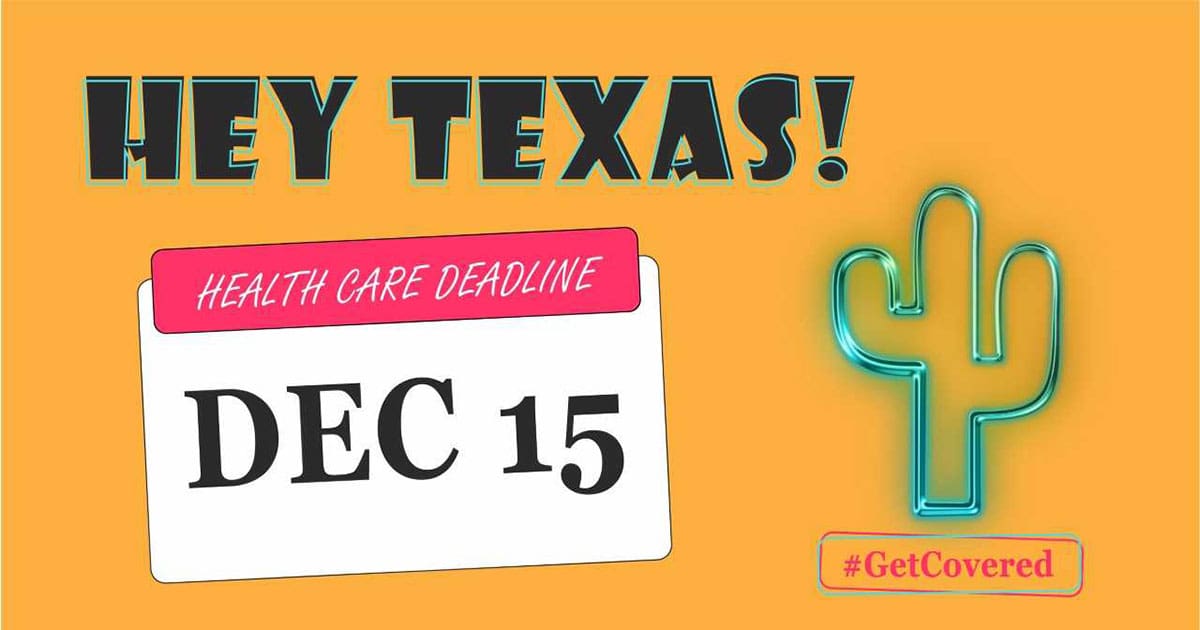
The good news: despite the Trump Administration putting hurdles in front of Americans’ ability to sign up for health care for 2018, Texans are signing up for coverage much faster than they did last year. Despite the Trump Administration putting hurdles in front of Americans’ ability to sign up for health care for 2018, Texans are signing up for coverage much faster than they did last year.
You can view health care plans and sign up at https://www.healthcare.gov/.

The not-so-good news: Because President Trump cut the insurance sign-up (“open enrollment”) period from 12 weeks to just six, Texans must maintain or even increase our current fast clip of enrollment right up to December 15. If we don’t, more Texans will be uninsured in 2018 than in 2017, keeping Texas sadly ranked last among the states.
Community groups helping Texans with enrollment report high enthusiasm, with the number of Texans enrolled at the four-week point 51 percent above enrollment at that point in 2016. Families are actively shopping, comparing plans, and checking out the help many can get to cut premiums and deductibles. Texas parents want to protect their families’ health and their financial security with health insurance when they have the opportunity to get good coverage at an affordable price.
Because Texas has seen some especially high rates of daily enrollment compared to last year, we wondered what things will look like for Texas IF we can keep up that high pace.
Here are our calculations:
- Despite high daily rates of enrollment nationwide, in many states Health Insurance Marketplace enrollment rates may ultimately drop below where they stood at the end of last year’s Open Enrollment period. This is because higher-speed enrollment is still not fast enough to make up for cutting the enrollment time in half. It’s like if a track athlete ran world record pace for the first two laps but then had to slow to a jog for the last two laps.
- If we look at last year’s Open Enrollment through mid-December 2016, and increase it by 51 percent (the increase over 2016 that we have seen in November 2017), it appears that if Texas keeps up the current high pace of enrollment, we could avoid a deep enrollment drop from last year.
- There’s a “wild card”: Texans who do not actively self-renew will be “auto-renewed” and added to the coverage rolls after the Open Enrollment period ends on 12/15/2017. We don’t really know if the share of Texans who are auto-renewed will be less, the same, or more than last year.
- If there were zero auto-renewed Texans (not a real possibility), we would see a modest decline in covered Texans compared to last year, but if the same number as last year auto renew, then we could see an increase in Marketplace coverage.
The take-away is: Time to spread the word that the deadline is coming! Hurry hurry hurry! It is critical for Texans to keep up or improve on the high pace of enrollment we saw in November, all the way to December 15! Only by keeping up or stepping up the pace will we avoid losing ground and seeing the ranks of the uninsured in Texans increase again.
You can view health care plans and sign up at https://www.healthcare.gov/.
Note: To calculate the 51 percent increase in the enrollment pace this year compared to last year, we compared plan selection in Texas for the 2017 plan year as of November 26, 2016 to the enrollment in Texas for the 2018 plan year as of November 25, 2017.
With a quickly approaching deadline—after which 400,000 Texas kids could be dropped from the Children’s Health Insurance Program (CHIP)—over 30 leading Texas health care and advocacy organizations sent a joint letter to U.S. Senators John Cornyn and Ted Cruz and Governor Greg Abbott urgently requesting intervention.
As part of the Children’s Health Coverage Coalition, the groups are asking federal leaders to renew CHIP funding as soon as possible.
Waiting to resolve CHIP funding until the end of this year is not an option, because any delay in funding could cause significant disruptions to families staring in early December.
Kids in Texas’ 53 counties affected by Hurricane Harvey might be especially vulnerable, as families struggle to rebuild their lives.
View a copy of the letter here. Texas CHIP enrollment data by county for August 2017 is available here.
Read more about CHIP and CHIP funding here.
To speak to leaders of some of the groups that signed on, please contact:
Children’s Defense Fund- Texas; Dr. Laura Guerra-Cardus LGuerraCar@childrensdefense.org (713) 419-8422
Texas Pediatric Society, The Texas Chapter of the American Academy of Pediatrics; contact Tricia Hall, Executive Director, C: 512-370-1506
Oliver Bernstein, Center for Public Policy Priorities, 512.289.8618
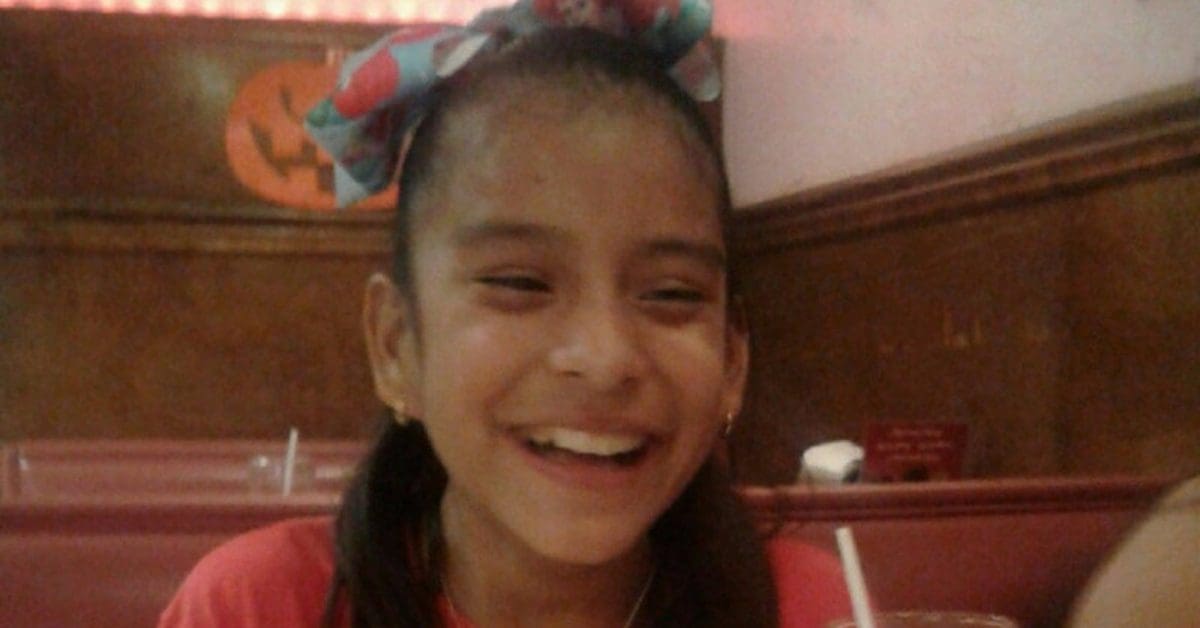
Update: On Friday, November 3, Rosa Maria was reunited with her parents. Her lawyers report that she has been served with a notice that she could face deportation, but charges have not been officially filed in immigration court. CPPP joins many others in calling for the Trump administration to drop her case.
The problem of targeting for immigration detention Texans who are seeking health care, or attending school, church, or court proceedings continues. CPPP urges you to read this brief on the problem and ways it can be addressed.
Many media outlets have reported the unbelievable story of 10-year-old Rosa Maria Hernandez, an undocumented immigrant with cerebral palsy who was detained by federal immigration authorities in Texas. She had passed through a Border Patrol checkpoint in an ambulance, on her way from Laredo to Corpus Christi to undergo emergency gall bladder surgery.
Border Patrol agents tried to persuade the family to agree to have the girl transferred to a Mexican hospital, pressing the family to sign a voluntary departure form for her. The family declined. The entire time Rosa Maria was in surgery and then in recovery, several armed Border Patrol agents stood outside her hospital room, the family said.
When it was time for her to leave the hospital, immigration agents took her to a facility in San Antonio where migrant children who arrive alone in the United States from Central America are usually held, even though her parents, who both lack legal status, live 150 miles away in Laredo.
As of October 30, Rosa Maria was in U.S. Department of Health and Human Services custody at Baptist Child and Family Services in San Antonio. According to advocates at Workers Defense Action Fund (WDAF), she is being processed for release through the Office of Refugee Resettlement. WDAF reports that her reunification process is being expedited, because these requests typically take 60 days. Rosa Maria’s surgeon in Corpus Christi directed that she see her primary care physician on November 2nd for a post-surgery appointment, but so far Immigration and Customs Enforcement (Border Patrol) has not said that they will allow Rosa Maria to be taken to Laredo for this appointment.
CPPP and the WDAF advocates call on Border Patrol officials to stop her deportation by administratively closing her file, and we urge Texans to call Congressman Will Hurd or Senator John Cornyn asking them to advocate for closure with DHS/Border Patrol. They have started a fund to assist Rosa Maria’s family with medical, housing and legal costs, and a petition calling for her release.
On October 31, lawyers representing Rosa Maria from the American Civil Liberties Union demanded she be released by the Office of Refugee Resettlement (ORR), citing the “violation of her statutory and constitutional rights.”
In addition to outrage and condemnation on social media, some notable statements calling for Rosa Maria’s immediate release to her family have come from The Texas Pediatric Society and the American Academy of Pediatrics, and the Texas Catholic Conference of Bishops, MALDEF, and the ACLU.
Barriers to Health Care, Education, Church, Community Life
Across the U.S., advocates, business owners, educators, and other community members report that families are avoiding church and school functions, and that even shopping for basic needs is significantly depressed. Reporting of crimes is down. Use of formal Supplemental Nutrition Assistance Program (SNAP), Medicaid, and Children’s Health Insurance Program (CHIP) benefits are down as even U.S. citizens and lawfully present immigrants are afraid to access benefits in the wake of federal administration policy and messaging. Texas’ new anti-immigrant SB 4 law only adds to the anxiety in Texas, as does word of these recent incidents.
The effects of this spreading pall of fear are no small matter to the well-being of Texas: Over one-third (34%) of Texas kids reside with at least one foreign-born parent: that’s 2.4 million Texas children.
What We Can Do: Strengthen and Enforce Protection of “Sensitive Locations”
While Rosa Maria’s story is among the most horrific in recent memory, Texas has had a problem for decades with children needing to leave the US-Mexico border area to reach medical care at a children’s hospital, and having to cross Border Patrol checkpoints. The most common situations include U.S. citizen children who have one or more undocumented parents; only occasionally will the child also lack legal status.
As media outlets have noted, the Department of Homeland Security and its Border Patrol and Customs and Border Protection divisions have a formal policy to avoid enforcement actions at “Sensitive Locations” including hospitals, schools, churches, and public demonstrations unless there are special circumstances.
Because it appears that Border Patrol is not consistently honoring this policy, lawmakers have filed bills in Congress to place the policy in statute. Texas networks, officials, and institutions should add their voices to those already calling for rigorous protection of sensitive locations. Texas cannot have healthy communities, strong churches, effective schools, or flourishing businesses as long as a substantial share of our families are afraid to leave home, much less to fully participate in their communities. Please read CPPP’s brief here about Sensitive Locations, and about how you can make a difference in this growing crisis for Texas.