Research & Data

We’re known for practical, data-driven policy solutions.

We use high-quality data collected from credible sources, analyzed by our team of experts. We explore data for potential solutions to everyday problems — and we make that data accessible to everyone, from policymakers to concerned Texans. Our goal is to help you visualize and quantify the effects that current policies have and why we need to improve them.

Disaggregated data, more granular information within a given data set, is critical for public policy. Crucial information can be hidden within broad averages. For example, 34% of Texans hold a bachelor’s degree; but that’s 63% for Asian Texans and 19% for Hispanic Texans. And even 63% hides differences among Asian Texans that broad categories can’t show.

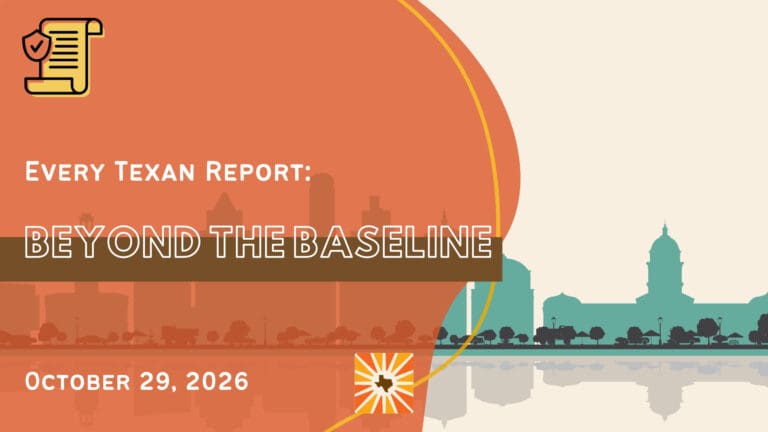
Our latest report, Beyond the Baseline, identifies race and ethnicity data gaps in various governmental organizations in Austin and calls for local and state action to implement standard data collection practices that will ensure everyone is seen. It outlines possible changes to federal policy that could limit our understanding of who lives in our communities, thereby limiting our ability to respond with appropriate public policy.

State and local governments must be able to 1) count on federal data, and 2) have their own capacity to gather and analyze data with standards that hold steady no matter which way federal leadership moves. The report shows how the Austin City Demographer’s data collection guide could be a municipal model for standardized, community-centered data collection.

The U.S. Census set a gold standard globally for the collection and distribution of data that is used by everyone from policymakers to researchers in the academic and private sectors. It is used for everything from education to health care to tax policy and business site development. The Census also is used to determine elected representative districts.

Complete counts are foundational to the success of the United States, and every community in the country. Texas needs data that goes Beyond the Baseline.


Our team produces an annual report on the status of Texas children, with support from the Annie E. Casey Foundation and local partners, including Methodist Healthcare Ministries of South Texas, Inc. You can find our most recent Texas Kids Count Dashboard here.

The Kids Count Data Center shows how kids fare on more than 70 measures of child well-being – economic well-being, education, nutrition and food access, demographics by age, gender, race, ethnicity, and more. You can observe changes over time, create maps and graphs, compare your location to others, and obtain data for grant proposals from trusted data sources. 

National Kids Count data is available here.

The Research and Data produces timely and relevant data briefs, disaggregating and analyzing data for partners, community members, and policymakers to access and use for their work. Some of the data briefs utilize data from U.S. Census surveys, such as the American Community Survey, and provide insights about Hispanic/Latinos in Texas, Indigenous People of Texas, and more.

Our team provided data and research support for the Texas Women’s Foundation’s Economic Issues for Women in Texas report. The report highlights data across four areas – child care, housing, education, and health insurance.

Our team has experience working with municipalities on data and equity projects, including the City of Dallas’s Equity Indicators, which are designed to measure equity – the fairness and justice in outcomes for and treatment of groups of people – across five thematic areas. 

Recent Publications & Data Briefs

Contact the Research & Data Team

Do you represent a community foundation, service provider, or other entity looking to use data to inform your work? Partner with the policy experts at Every Texan to benefit from our rigorous data analysis, advocacy, and communication services. We are available for hire for contract or grant-funded projects that will help you make informed decisions.

To propose a project, please email Senior Director of Research & Data  Coda Rayo-Garza