
Blog
Our Chance to Stand Up for Public Schools
On March 19th in Austin, the public will have a rare chance to testify about the importance of investing in our public schools. The new Texas Commission on Public School

On March 19th in Austin, the public will have a rare chance to testify about the importance of investing in our public schools. The new Texas Commission on Public School
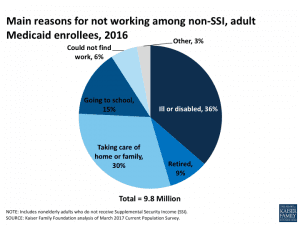
Medicaid is a critically important program that pays for more than 50 percent of births in the United States, and covers four in ten Texas children and virtually all Americans

With important elections slated for 2018, it’s a good chance to ask candidates for all offices where they stand on key policy issues. Here at CPPP, we have assembled some
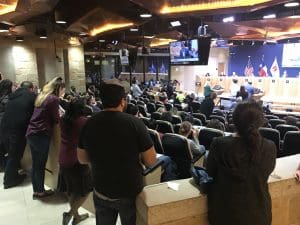
Just after midnight on Thursday, the Austin City Council passed an ordinance allowing all Austin workers to earn paid sick time, making Austin the first city in Texas – and

This post was written by CPPP Communications Intern Bianca Lopez. Photo credit: Glenn Strong, Flickr. CC license: https://creativecommons.org/licenses/by-sa/2.0 In general, math scores are a pretty good indicator of students’ future

On February 12, the White House released its $4.4 trillion proposal for the 2019 federal budget, which calls for many of the same deep cuts to health, housing, and education

Photo: Trey Perry, Creative Commons License 2.0 Earlier this week the respected, independent, non-partisan Institute for Women’s Policy Research (IWPR) released a new cost-benefit analysis of the proposed paid sick leave ordinance for
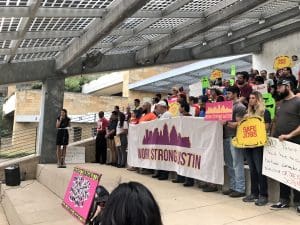
Communities and businesses in Austin could see over $8 million in annual net savings should Austin implement the paid sick leave ordinance sponsored by Council Member Casar and co-sponsored by

For more info on school finance in Texas, head here. The Legislative Budget Board estimates that the state’s share of Foundation School Program[i] funding will drop to 38 percent by

It could seem like substance use disorders (SUDs), including opioid addiction are a new problem in Texas, but that’s not the case. What is more recent are the full SUD