
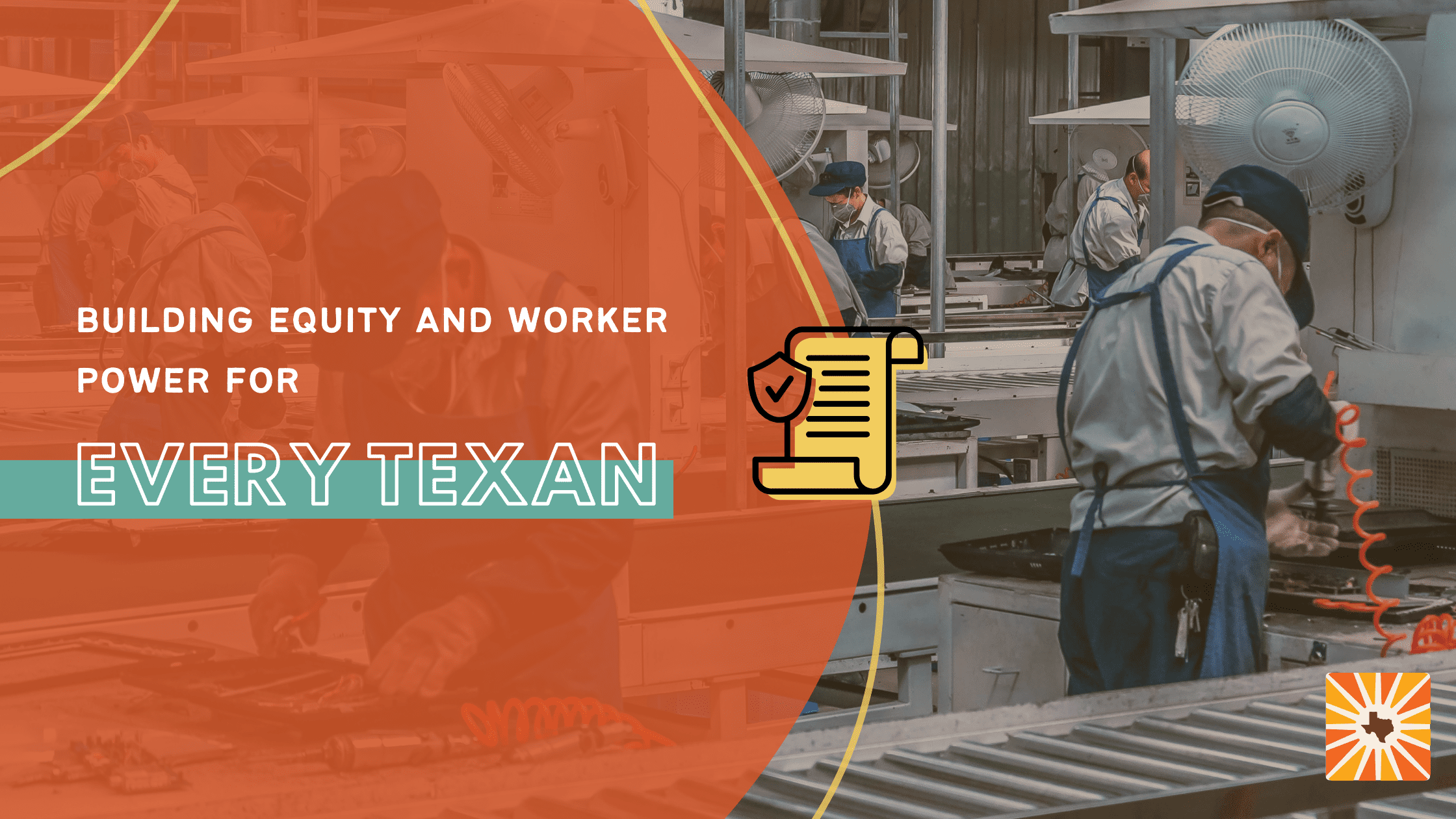
In 2024, Every Texan published the State of Working Texans, a four-part series offering an overview of the labor market with a focus on working Texans, low-income families, and people of color.
Two years later, much has changed in our state’s labor market and for current policies that help support working Texans. Later this year, Every Texan will launch our 2026 update to the series, exploring key developments in the labor market amidst sweeping federal policy changes impacting Texas. Our analysis is supported by data provided by the Economic Policy Institute (EPI), the Federal Reserve Bank of Dallas, the Texas Workforce Commission’s Labor Market Information website, and other sources.
Questions we will consider in this year’s edition:
- What impact is the federal immigration crackdown having on the Texas labor market and in what sectors? What ripple effects can we observe? Immigration is important to maintain economic growth, and more aggressive enforcement tends to reduce immigration and raise unemployment. The Dallas Fed acknowledges the impact of the crackdown on jobs, and our early analysis of Texas unemployment by county suggests that border counties, where unemployment is typically higher, could be hit especially hard.
- What do federal government layoffs and shutdowns mean for unionized federal workers across the U.S., including in Texas? CBPP analysis indicates that the federal workforce shrank by 220,000 workers in 2025. In addition to the federal workforce itself, services provided by the federal government are an important input for stability and growth in the private sector.
- Are lower-wage workers continuing to see improvements in wage growth? What occupations continue to see the largest wage gaps? Are more workers getting paid what they’re worth? The boost in real pay lower-wage workers experienced after COVID appears to be over – nationally, at least. According to EPI, low-wage workers, who have averaged real wage growth of 2.5% over the past five years, are now seeing declines as of late 2025.
- What other impacts will persistent inflation and the affordability crisis have on working Texans? The many, sweeping changes made to economic policy by the Trump administration – haphazard and unpredictable tariffs, federal job cuts, the Iran war – are likely to show more dramatic impacts in 2026.
- What sectors are seeing employment growth, and who is benefiting? What sectors are experiencing decline? Nationally, manufacturing jobs (supposedly what the administration’s tariffs are intended to boost) decreased by about 157,000 from 2024 to 2025. In Texas, the Dallas Fed notes that job growth was flat overall in 2025, with increases in the number of health care and construction jobs being undermined by losses elsewhere.
- What state policy changes would advance an economy that works for everyone? The 2026 State of Working Texans report will lead directly into our advocacy for the 2027 legislative session. Possible policy efforts may include work on paid family leave, more affordable higher education, greater access to SNAP, fighting junk insurance, and mitigating federal funding cuts.
The resilience of working Texans keeps our state economy in better shape than most around the nation, but it comes at a cost. The 2026 State of Working Texans report will offer advocates and policymakers a critical analysis of the investments needed to ensure that every job in Texas offers access to economic opportunity.
If you are curious about specific issues facing working Texans, we’d love to hear from you and provide answers through this series. Reach out to us at info@everytexan.org.